« The okapi is one of the most recently discovered mammals »
Is the okapi more like a horse or a giraffe?
A question left unanswered for a long time
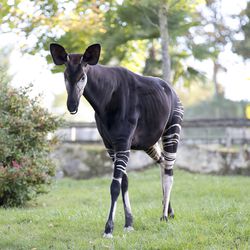
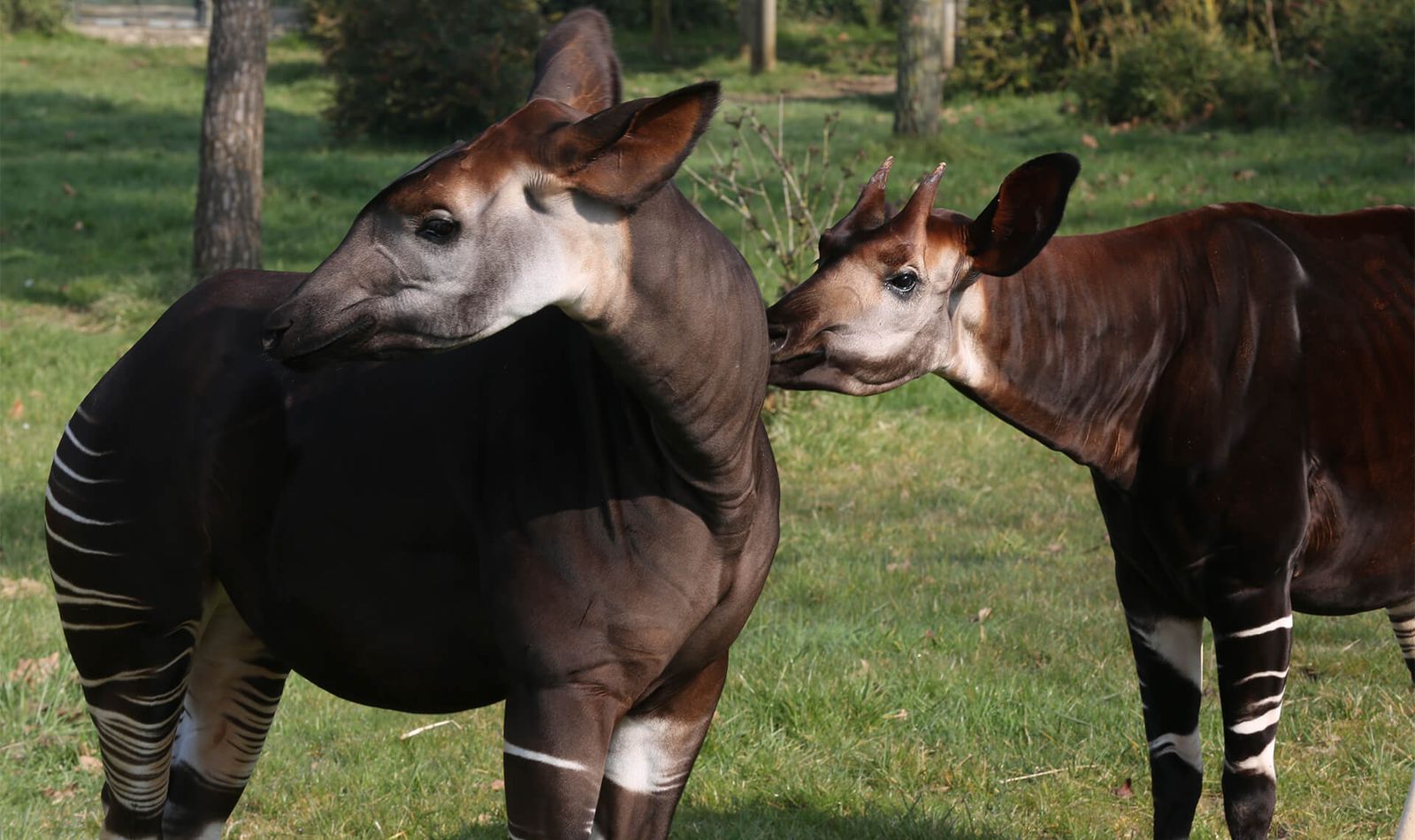
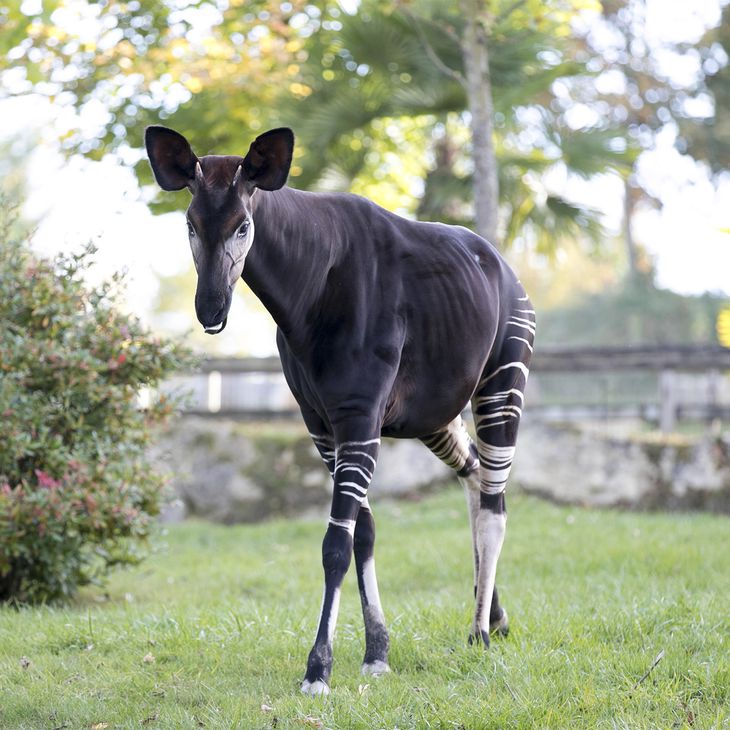
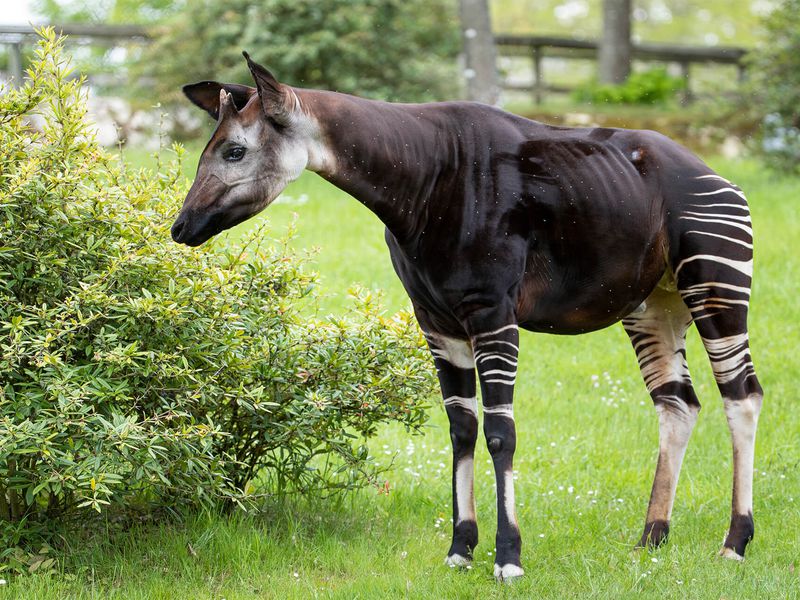
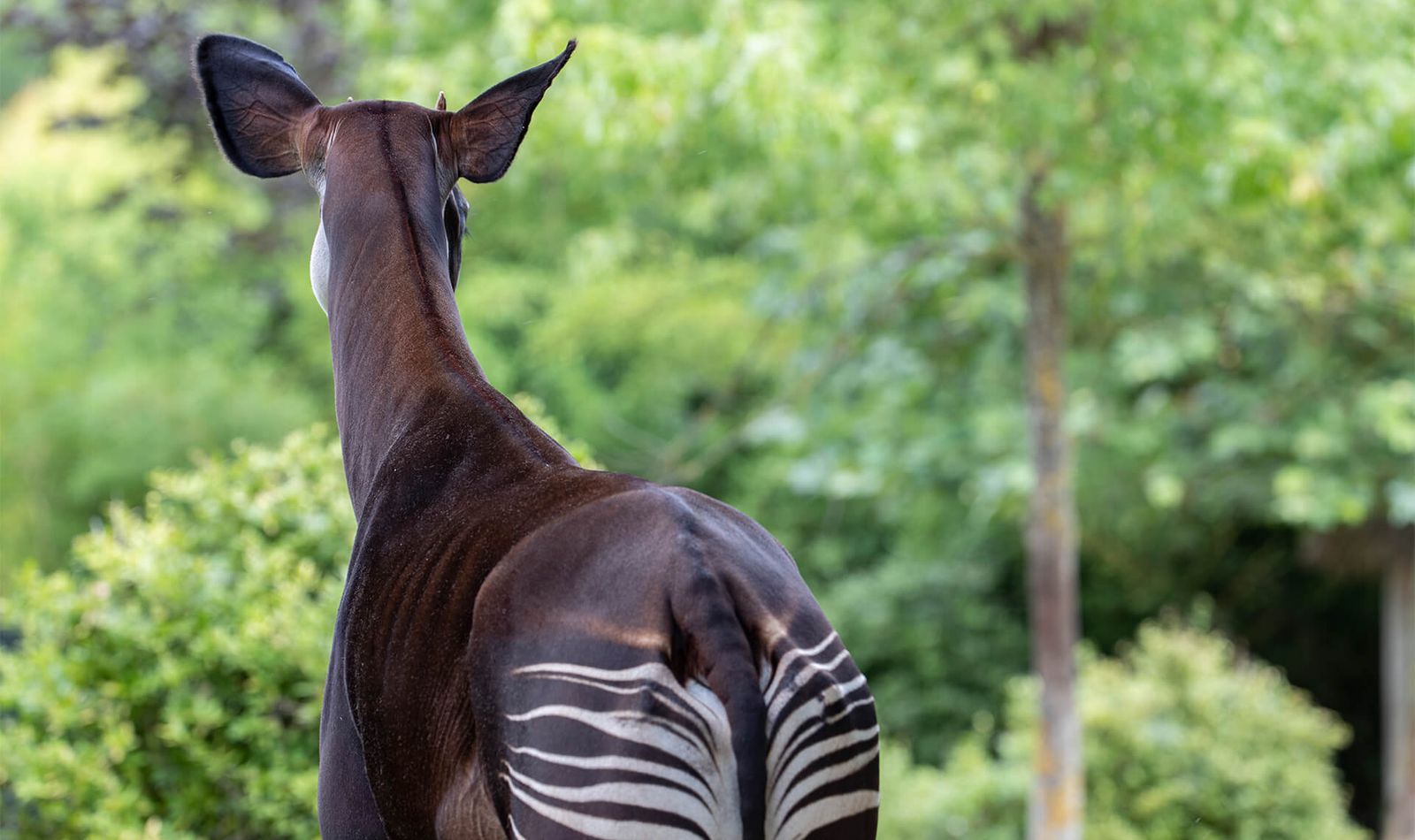
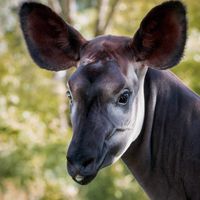
The okapi is an intriguing animal. Its long zebra-striped legs, its size, and its build led scientists to originally classify it as an equine, like the horse and the zebra. But it is actually more like a giraffe! The okapi shares many characteristics with the giraffe, three of which are particularly noticeable: an exceptionally long neck, a tongue that can reach more than 30 cm in length, and two bony horns on the top of the skull. Only male okapis have these horns, called “ossicones”, whereas both male and female giraffes possess them.
Did you know?
Exceptional birth at Beauval
A baby okapi has been born!
On Thursday, 13 August 2026, at 9:09 a.m., Quinta gave birth to her first calf, watched by our teams and delighted visitors. Just thirty minutes after being born, the baby okapi was already standing on its long legs, and less than an hour later, it was nursing from its mother.
Based on initial observations, the calf appears to be a male, although its sex has yet to be confirmed. His name will soon be chosen by his keepers.
This birth is all the more special because Mambasa, his father, was himself born at Beauval in 2018. The ZooParc’s okapi group now numbers five individuals!
Beauval Nature rescues okapis in the Congo
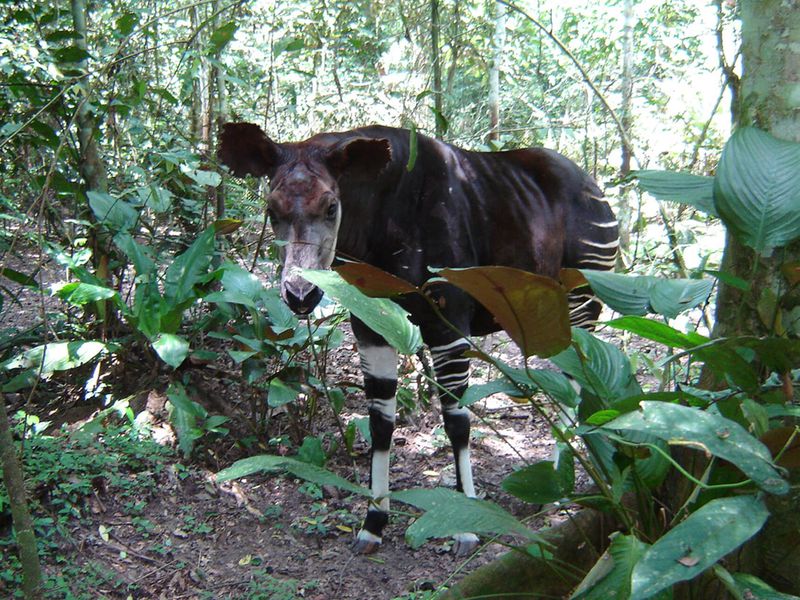
For centuries, the Ituri forest in the Democratic Republic of Congo has been a refuge for okapis and for populations of Pygmies who depend on its natural resources. Civil war, which has raged in this country for years, has led to an increase in poaching and deforestation.
Beauval Nature supports the Okapi Conservation Project, the objectives of which are as follows: to manage the okapi population, to increase eco-guard patrols, to develop equipment for okapi monitoring, and to launch a reforestation programme with the support of local communities.
Sponsor our okapis
Establish a strong bond with your favourite animal whilst supporting conservation programmes through the Beauval Nature association!
Endangered
Learn more about the species
-
FolivoreDiet
-
15 monthsGestation period
-
1 youngLitter size
-
Tropical forestsHabitat
A late discovery
An expert of self-medication
Okapi reproduction

Take full advantage of the experience thanks to our mobile application!
Find out more