« The mammal that smells like popcorn! »
Binturongs
A carnivore with a prehensile tail
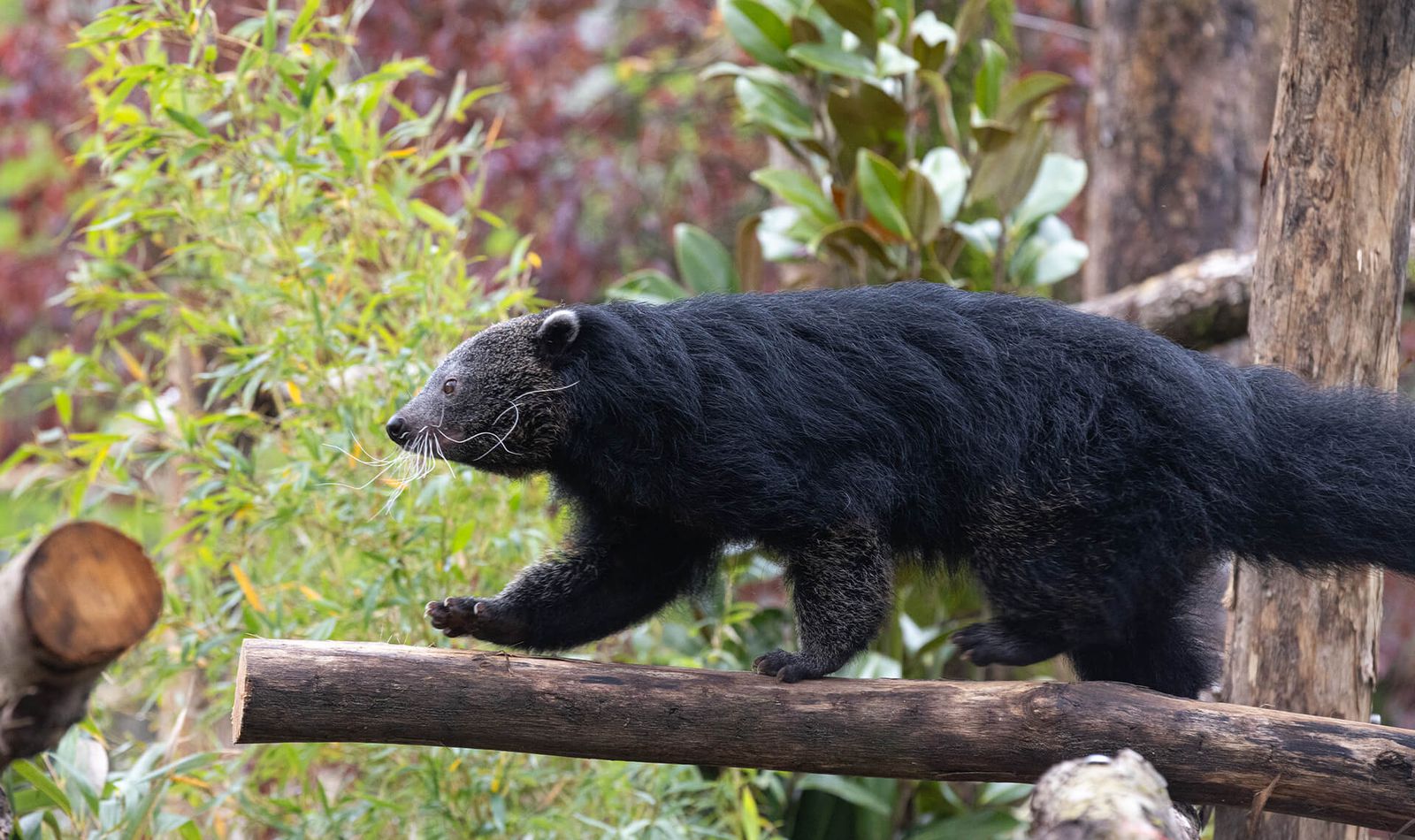
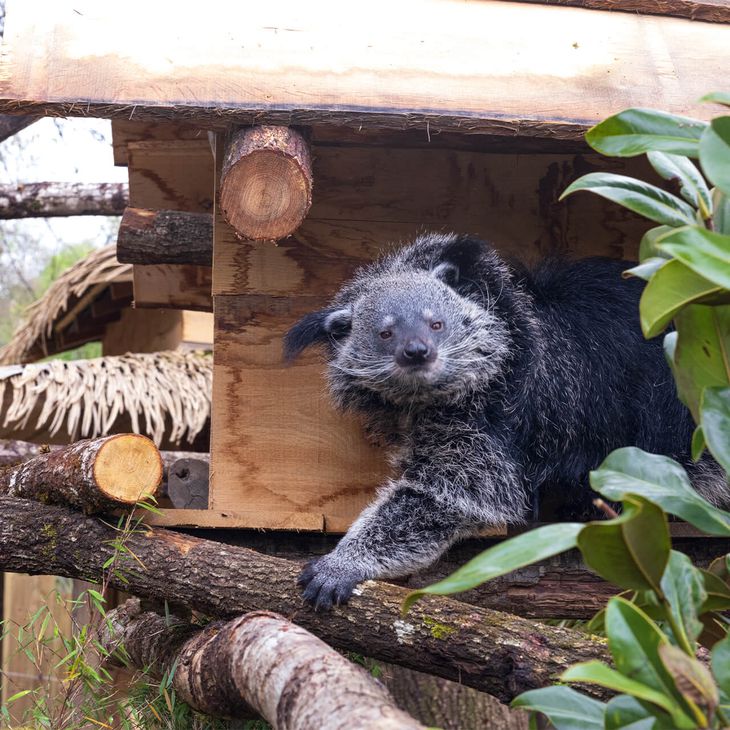
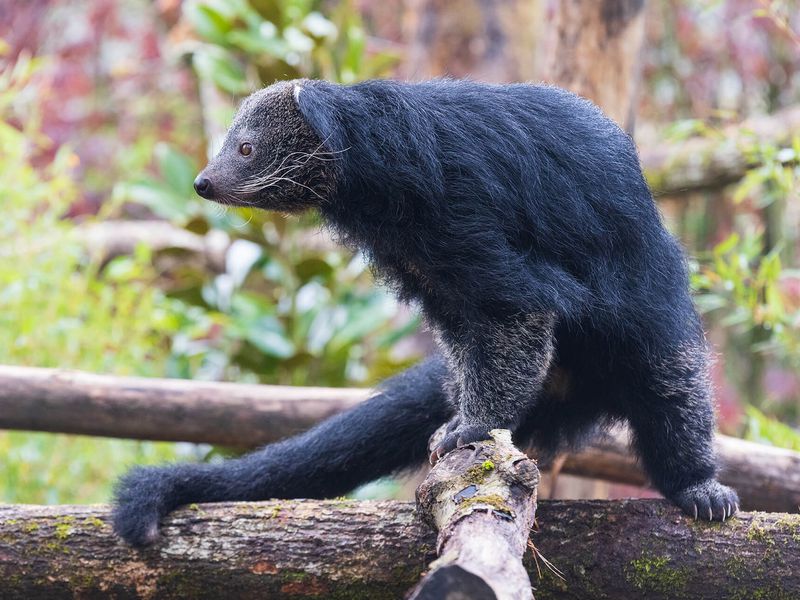
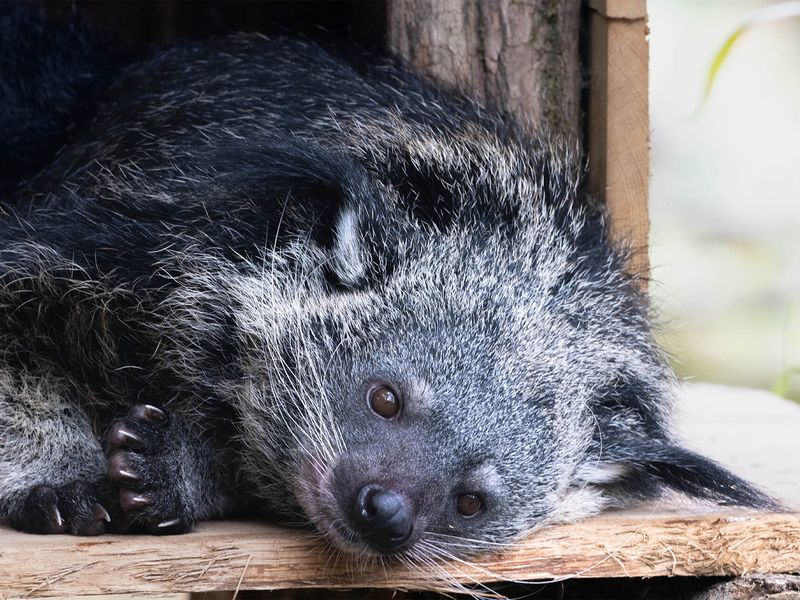
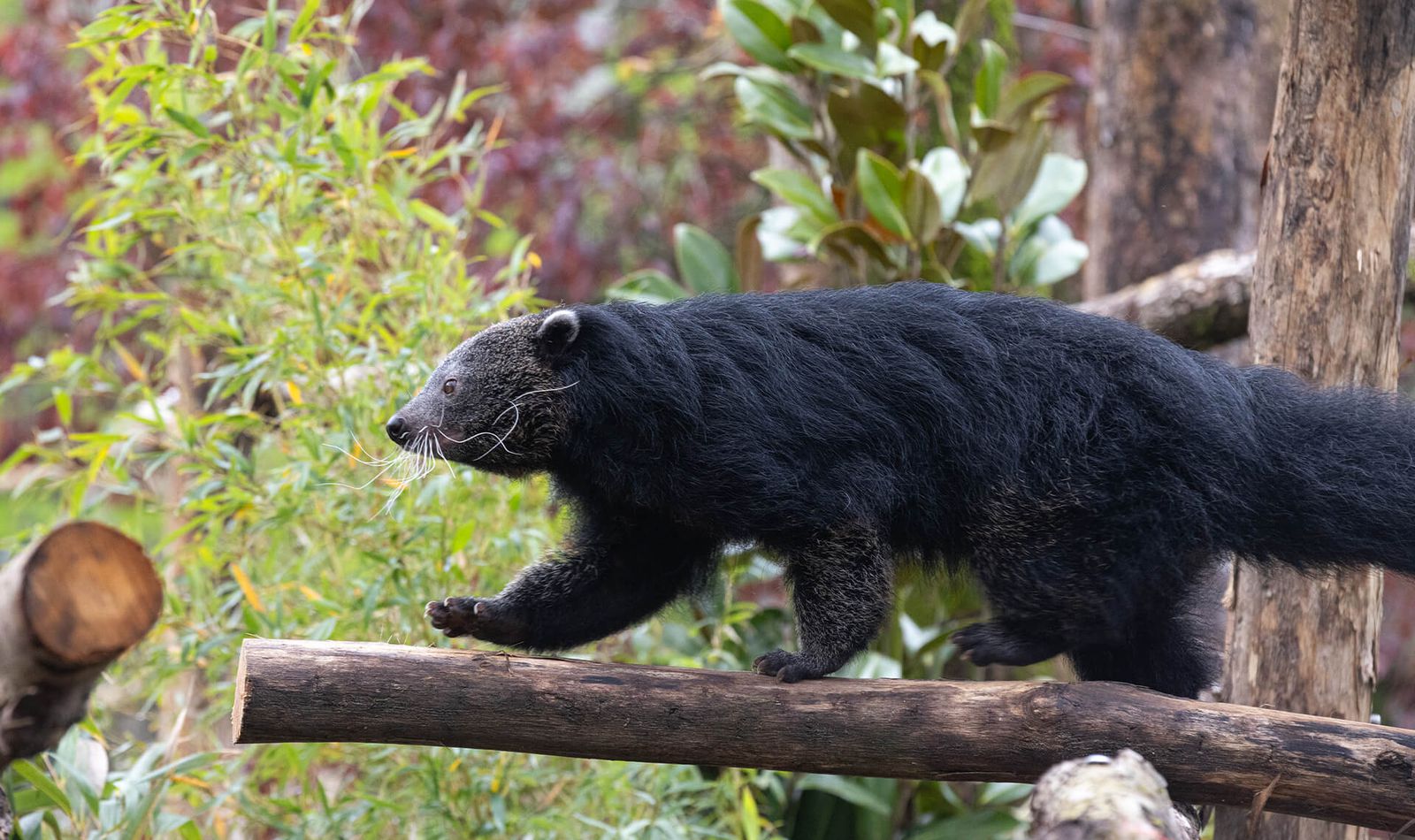
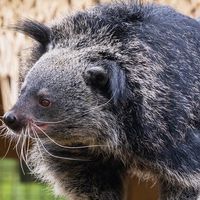
The binturong is the largest member of the Viverridae family and can weigh between 9 and 20 kg (20–44 lbs). Females are around 20% larger than males. It is covered in long, coarse black fur, sometimes tipped with grey. Long tufts of hair protrude from its small, rounded ears.
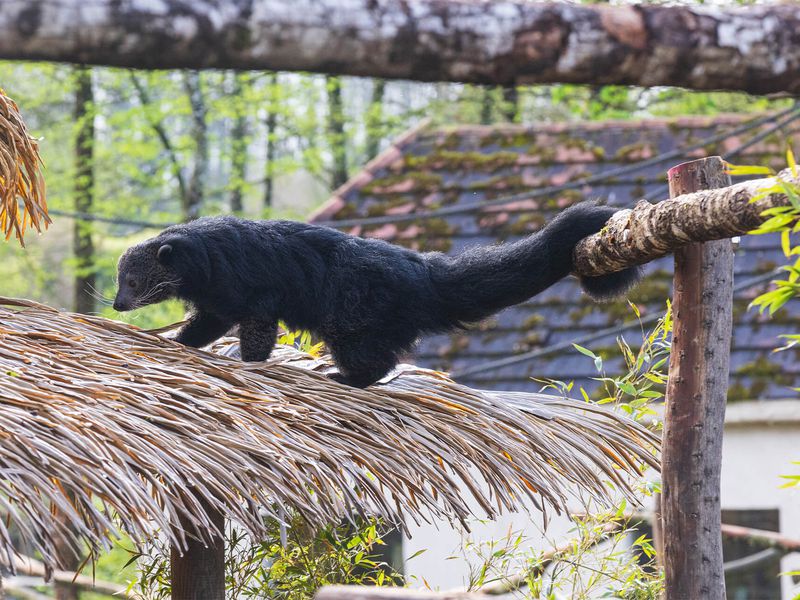
The binturong is one of only two carnivorous mammals with a prehensile tail, the other being the kinkajou. Active both during the day and at night, it spends most of its time in the trees, where it also sleeps. However, it must come down to the ground to move from one tree to another.
Native to Asia, the binturong inhabits tropical forests across Bangladesh, Bhutan, Cambodia, China, India, Laos, Malaysia, Nepal, the Philippines, Thailand and Vietnam. Smaller populations can also be found on the Indonesian islands of Java, Sumatra, Nias, Riau and Bangka.
Did you know?
Hubert and Shelly
Our adorable binturongs
These fascinating animals are ready to win you over with their unique charm. Come and meet our newest residents during your next visit to ZooParc de Beauval!
A mammal under threat
An estimated 30% of the world’s binturong population has disappeared over the past 30 years. The species faces several threats, including deforestation, habitat degradation (particularly in the southern part of its range) and use in traditional Asian medicine.
Binturongs are also hunted for their fur and meat, which is considered a delicacy in some Asian countries. In addition, they are relatively easy to tame and can form close bonds with humans, making them popular in the illegal exotic pet trade.
ZooParc de Beauval is proud to welcome these remarkable animals and introduce them to as many visitors as possible. The species is listed as Vulnerable on the IUCN Red List, is classified as Critically Endangered on China’s Red List, and is legally protected in Malaysia.
However, current conservation measures remain insufficient. Stronger enforcement of laws against poaching and habitat destruction is essential to ensure the long-term survival of this declining species.
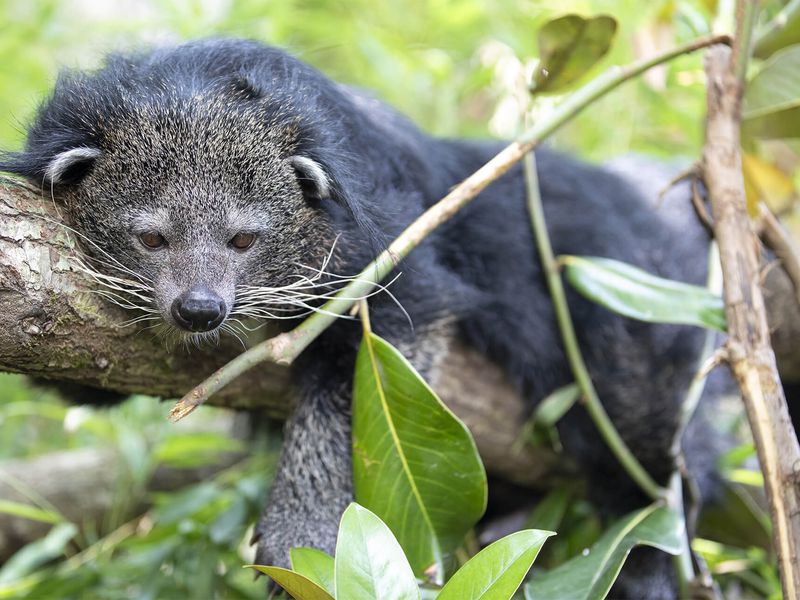
Welcome Hubert and Shelly, a new species at Beauval!
Hubert and Shelly, our two binturongs, can be seen together in the former coati enclosure. They share their habitat with Asian small-clawed otters.
Their enclosure is located close to the sea lion pool and Le Tropical self-service restaurant, making it the perfect place to stop and discover these charming “bearcats”, one of the species’ well-known nicknames, recognised for their thick coat and long whiskers.
Sponsor our binturongs
Support your favourite species while helping fund conservation programmes through the Beauval Nature association.
Vulnerable
Learn more about the species
-
Omnivore, with a fruit-eating tendencyDiet
-
92 daysGestation period
-
1 to 6 youngLitter size
-
Tropical forestsHabitat
Why do binturongs smell like popcorn?
Nature has it all figured out
A mammal built for climbing

Take full advantage of the experience thanks to our mobile application!
Find out more