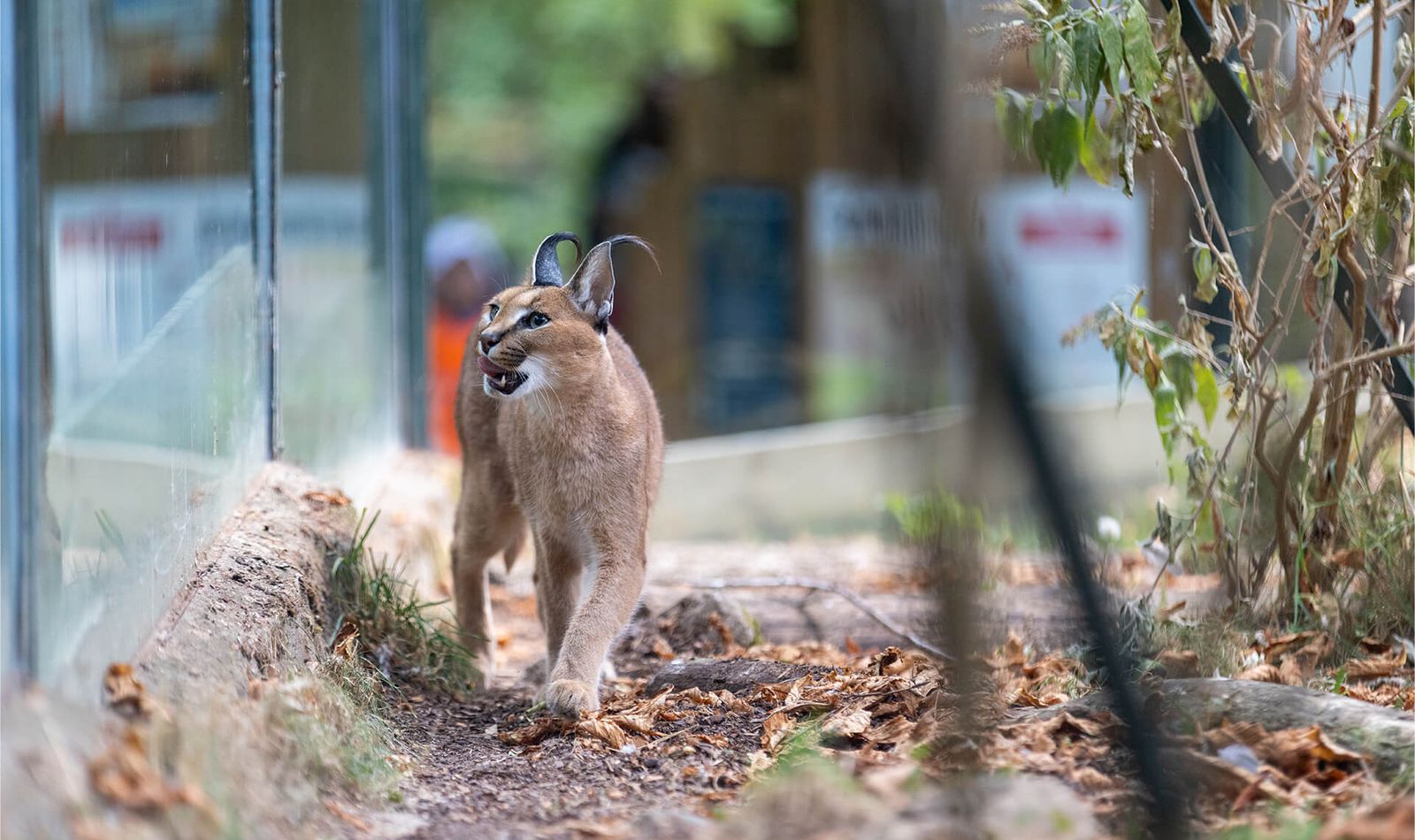
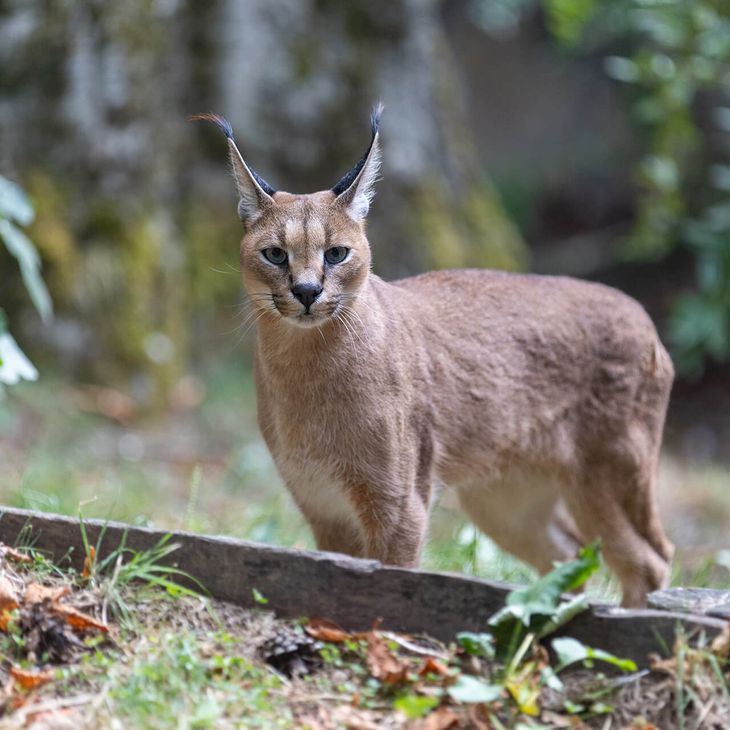
« An agile and athletic wild cat, the caracal can leap up to 3 metres into the air to catch a bird in flight! »
Once believed to be closely related to the lynx…
…it actually belongs to the same lineage as the serval and the African golden cat
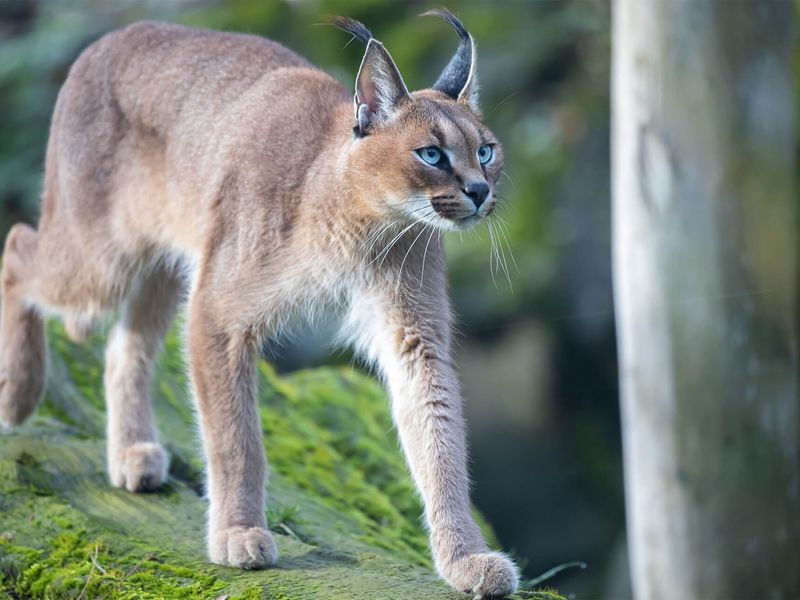
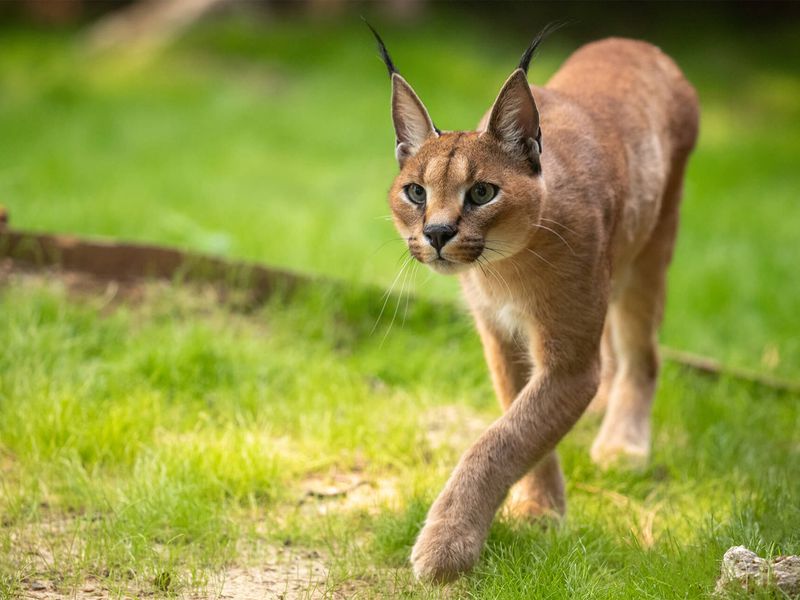
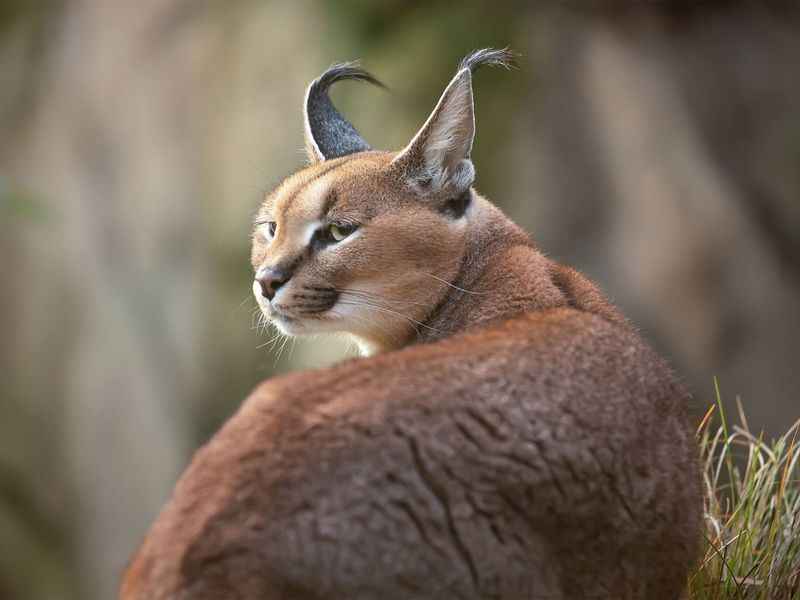
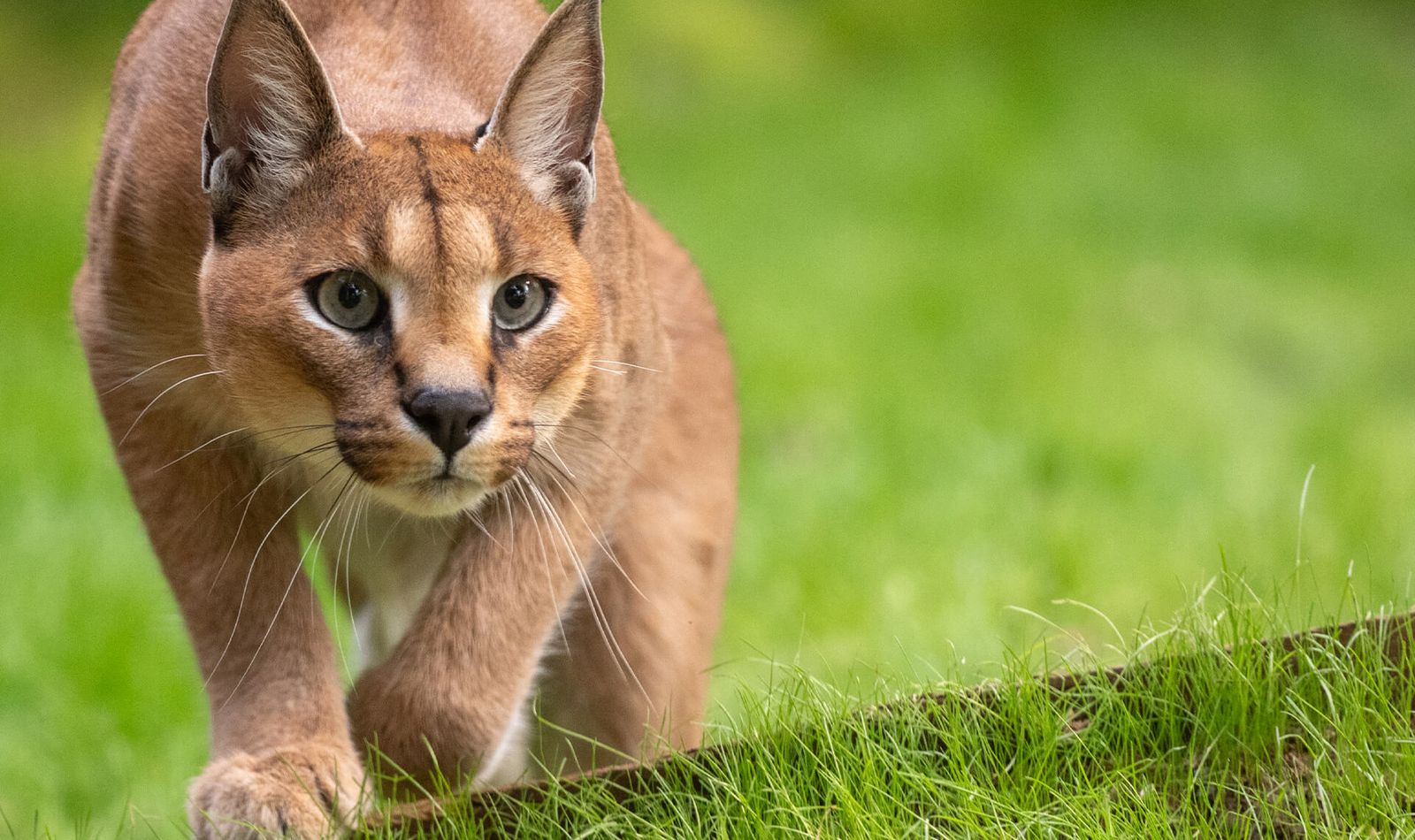
The caracal is a slender yet powerful wild cat, easily recognised by its plain coat, which ranges from pale sandy to reddish-brown, contrasting with its white throat and underparts. Its relatively short tail may display subtle markings, while a distinctive black line runs from each eye to the nose. Its long hind legs contribute to its athletic appearance.
Its most striking feature is its large black ears, topped with impressive tufts of hair measuring around 5 cm. Although it was once considered closely related to the lynx because of these ear tufts, more recent phylogenetic studies have shown that the caracal is actually more closely related to the serval and the African golden cat within the cat family (Felidae). Its name comes from the Turkish word karakulak, meaning “black ears”, in reference to the dark colouring on the back of its ears.
Widespread but facing many threats
Although classified as “Least Concern” thanks to its wide distribution and remarkable adaptability, the caracal faces numerous threats. Population trends vary greatly from one country to another, ranging from common to endangered, and in some regions they remain poorly documented.
Habitat loss and declining prey populations caused by human expansion are among the main drivers of decline. Often regarded as a predator of livestock and poultry, the caracal is frequently shot, trapped or poisoned. Yet it also plays an important ecological role by helping control rodents and birds that damage crops.
Caracals are also threatened by road traffic and competition from free-roaming dogs. Once trained for hunting in India, they are now increasingly targeted by the illegal exotic pet trade, alongside the serval.
Similar journeys, very different personalities
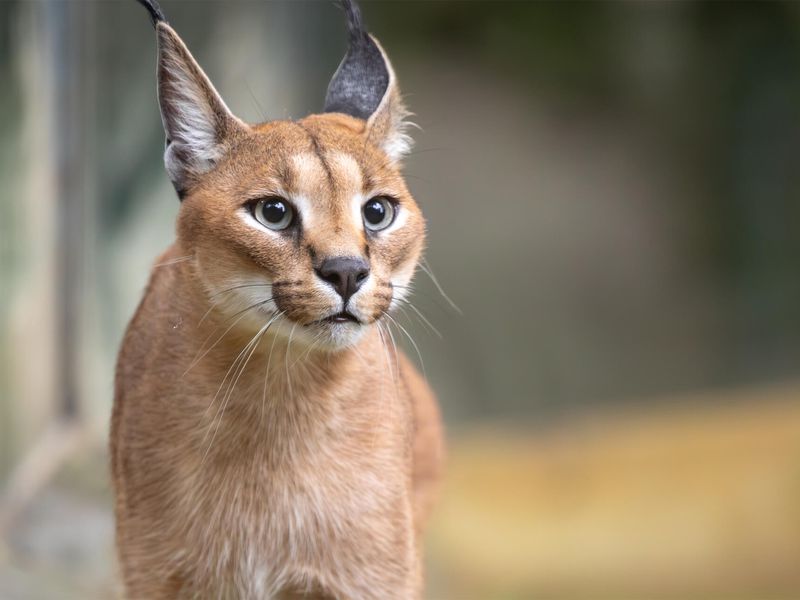
Maxima and Simba have remarkably different temperaments. Maxima is a cautious, intelligent and observant female. Since arriving at Beauval in 2023, she has made significant progress. She is now far less wary and no longer seeks direct contact with people.
Simba, on the other hand, is a caracal that has become highly accustomed to humans. Probably raised alongside domestic cats in an apartment, he constantly seeks attention and physical contact. Full of energy, he can sometimes be difficult to manage, which is why a dedicated training programme has been developed to support him. Despite his lively personality, he also enjoys relaxing beside Maxima.
Their contrasting behaviours are largely explained by their early life experiences. Simba grew up in unusually close contact with humans, whereas Maxima experienced severe trauma before being rescued. She was found locked inside a toilet and had been fed an inappropriate diet that even included whipped cream.

Sponsor our caracals
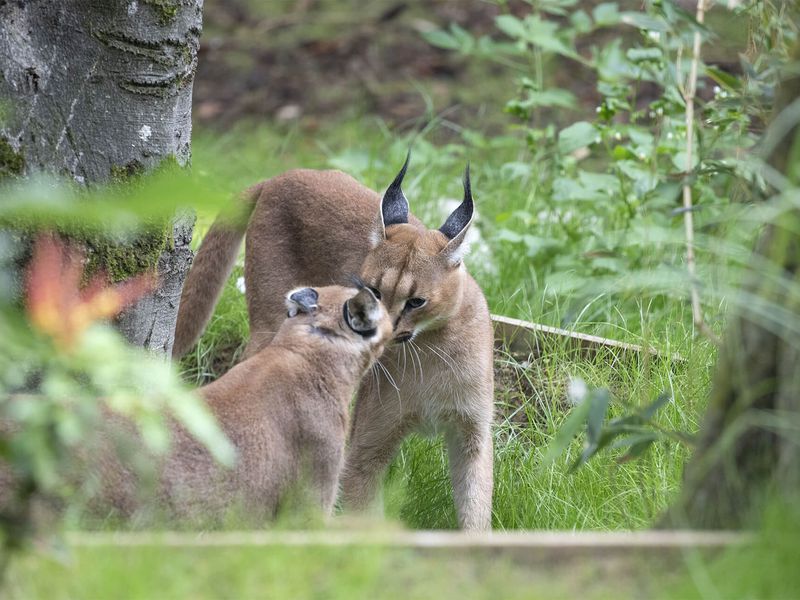
Establish a strong bond with your favourite animal whilst supporting conservation programmes through the Beauval Nature association!
Least concern

Learn more about the species
-
CarnivoreDiet
-
Approximately 2.5 monthsGestation period
-
2 to 6 cubs (typically 2 to 3)Litter size
-
Arid environments, Pastures, Mountains, Forests, SavannahsHabitat