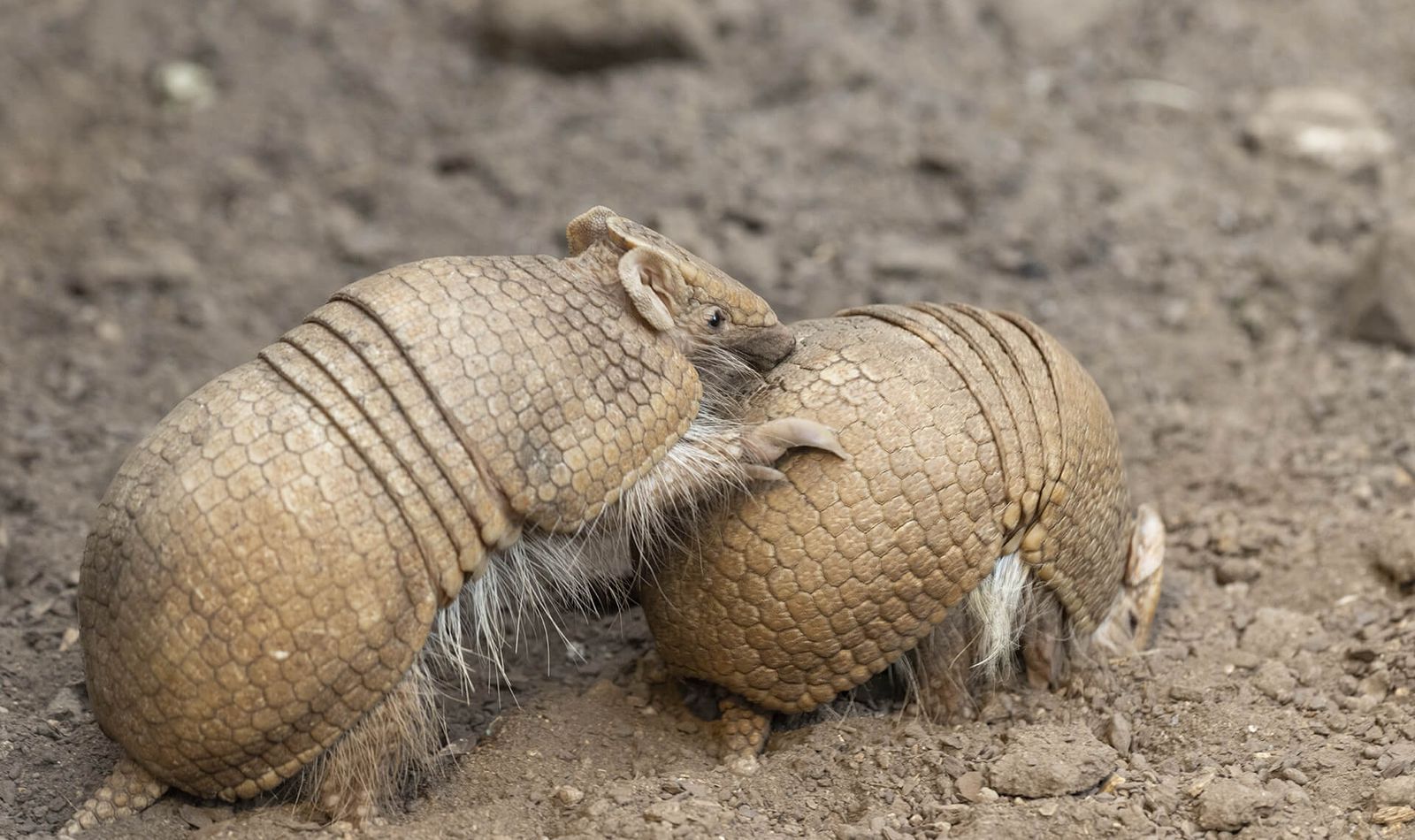
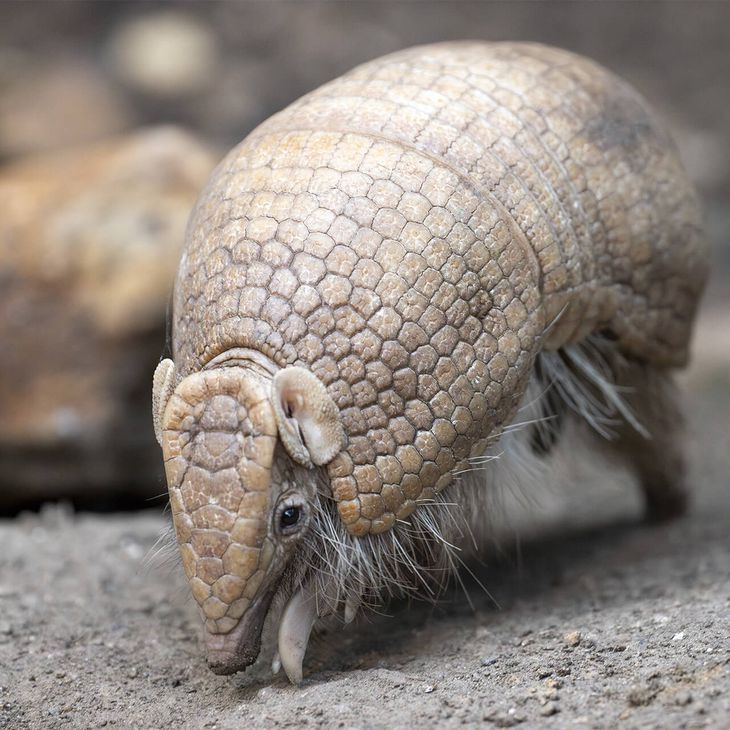
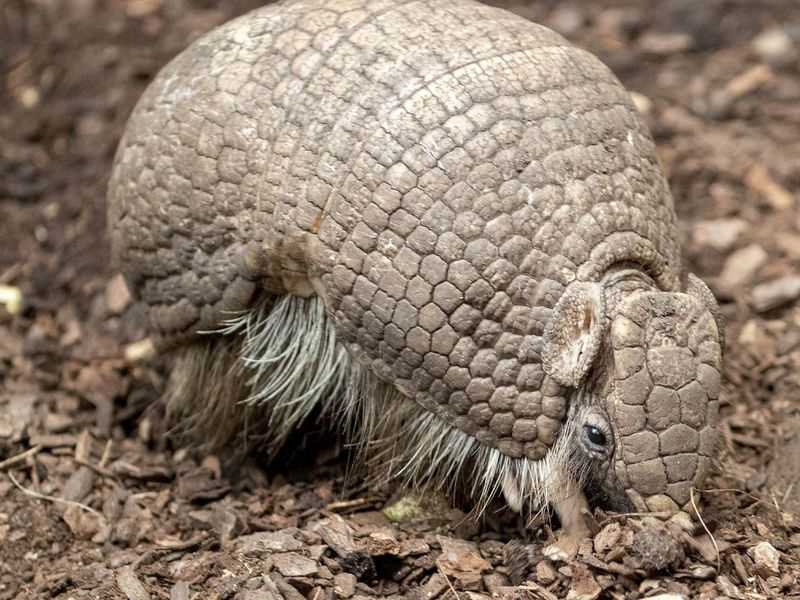
« When threatened, the three-banded armadillo transforms itself into an armoured ball that seems almost impossible to open »
The southern three-banded armadillo
South America’s little armoured mammal
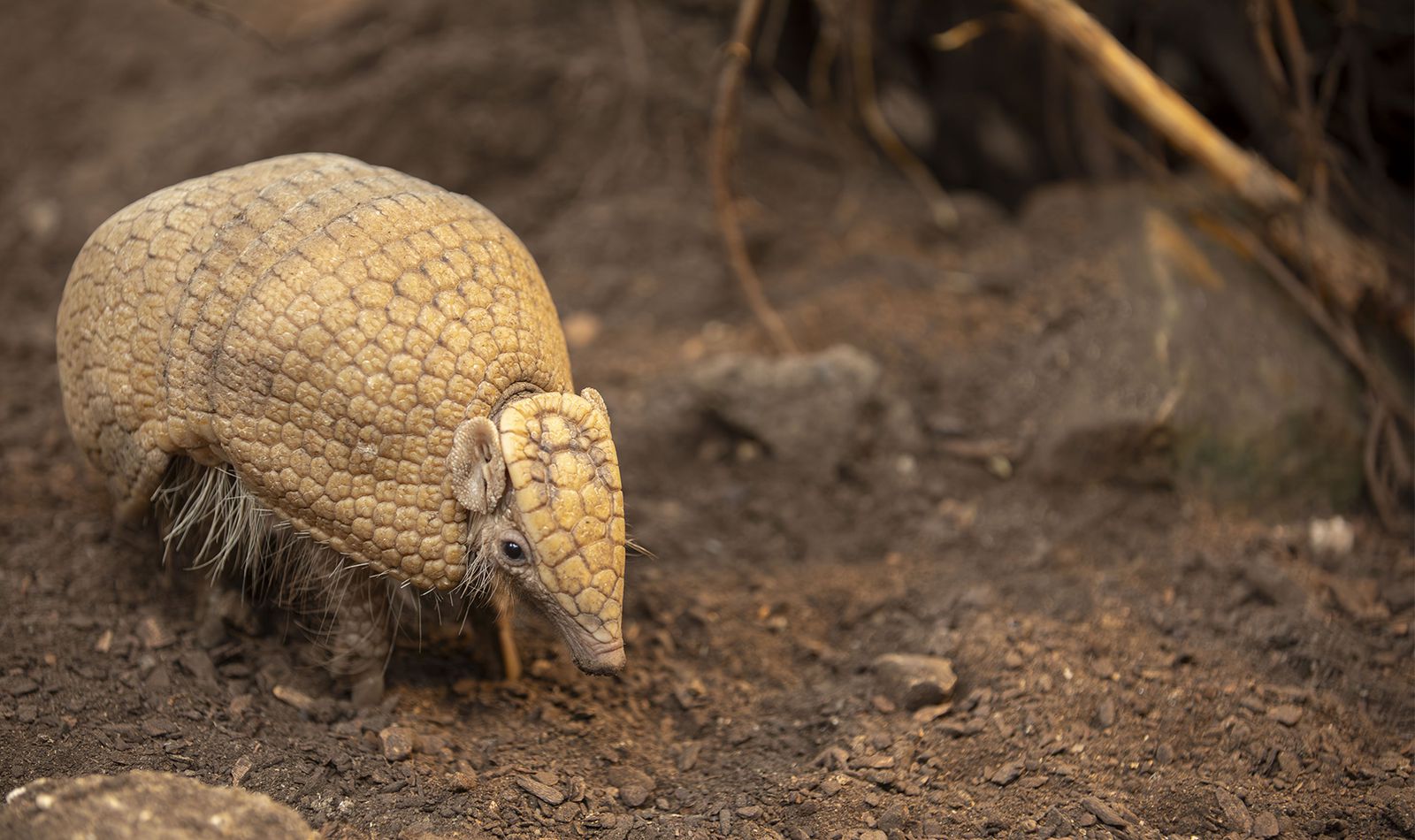
The southern three-banded armadillo is a small South American mammal protected by an articulated shell covering its back, head and tail. It is found in Bolivia, Brazil, Paraguay and Argentina, particularly in the open, dry habitats of the Gran Chaco. Primarily insectivorous, it feeds mainly on ants and termites. Its most distinctive characteristic, however, is its ability to roll itself into an almost perfect ball, a remarkable defence mechanism found in very few armadillo species.
You can discover the southern three-banded armadillo among the many species in Beauval’s animal directory.
Did you know?
An albino three-banded armadillo is born!
A world first at Beauval
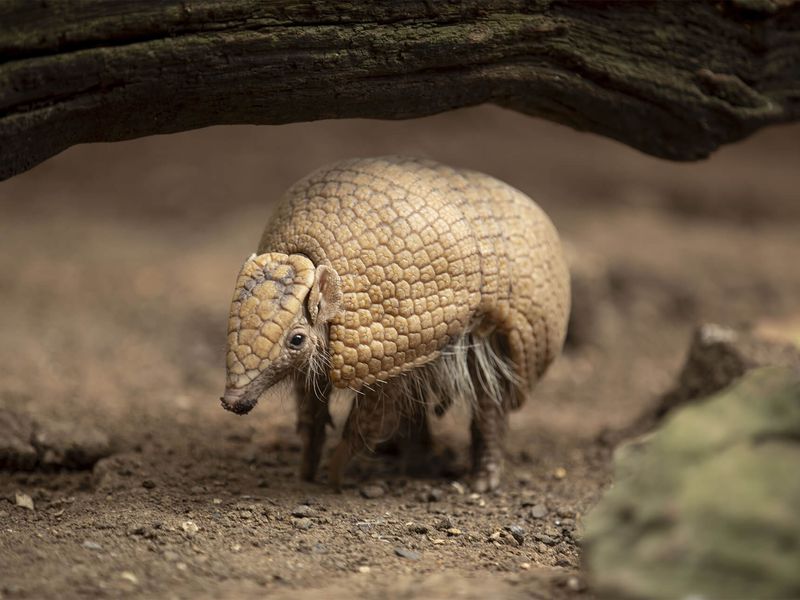
A rare event has occurred at Beauval: a female albino three-banded armadillo has been born, the first-ever documented case in this species. Discover her in our video.
A protected but vulnerable species
The southern three-banded armadillo is classified as “Near Threatened” by the IUCN.
Paradoxically, its greatest defence can sometimes work against it. Rather than running away when threatened, it curls into a ball, making it relatively easy for hunters to pick up.
Habitat loss is another major threat as the dry savannahs of the Chaco are increasingly converted into agricultural land. Protecting these environments therefore helps safeguard not only the armadillo, but the many other species that depend on them.
Through Beauval Nature, ZooParc de Beauval supports numerous species and habitat conservation programmes in South America and around the world.
Where can you see the southern three-banded armadillo at ZooParc de Beauval?
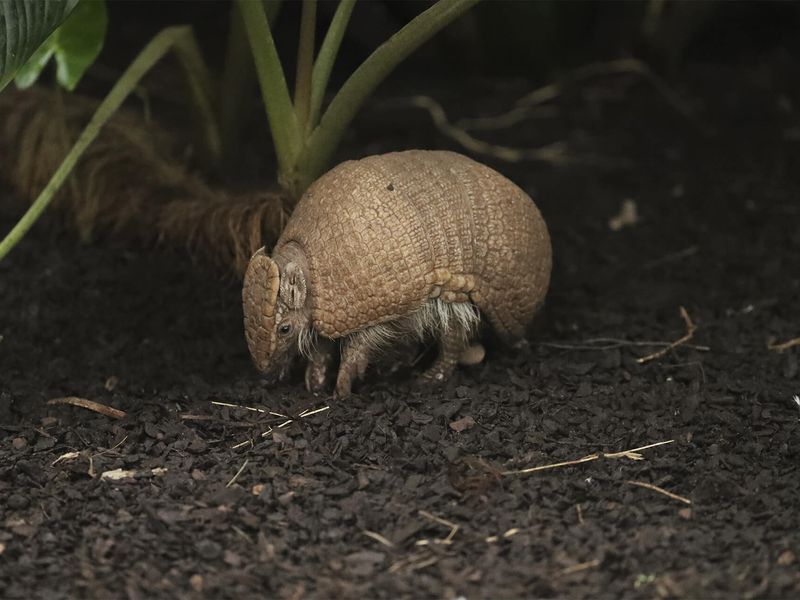
At ZooParc de Beauval, the southern three-banded armadillo is one of the small mammals you can discover during your visit.
Find its location on the ZooParc map and look carefully. This discreet animal can require a little patience to spot as it explores its surroundings.
The southern three-banded armadillos are currently located in The Bird Tropical Greenhouse.
Sponsor our animals
Establish a strong bond with your favourite animal whilst supporting conservation programmes through the Beauval Nature association!
Near threatened
Learn more about the species
-
InsectivorousDiet
-
4 monthsGestation period
-
1 youngLitter size
-
Pastures, Forests, SavannahsHabitat