« The brown bear is one of the world’s largest land predators »
A carnivore by nature and genetics…
…with an omnivorous diet
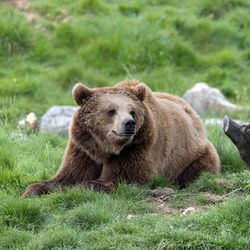
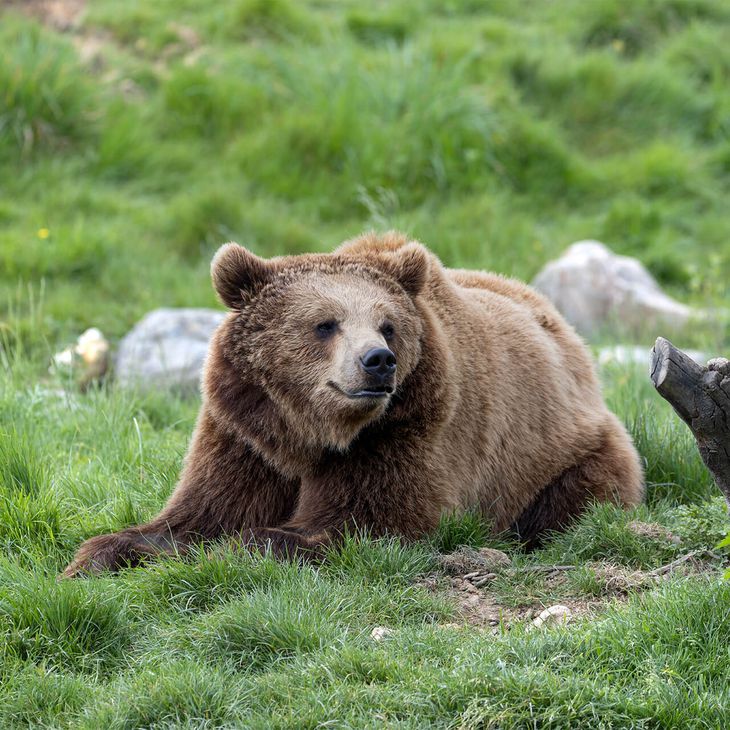
The brown bear is one of the world’s largest land predators. Among the eight bear species, the polar bear is the largest, reaching up to 2.5 metres in body length (from head to rump) and weighing as much as 800 kg. It is also the largest terrestrial member of the order Carnivora. The brown bear ranks just behind it.
In general, the colder the environment a bear species inhabits, the larger its body size tends to be.
Although the brown bear is classified as a carnivore based on its anatomy and genetics, its diet is actually omnivorous. It feeds mainly on grasses, mosses, roots and bulbs, while also eating mushrooms, insects, rodents and fish throughout the year. During summer, fruits, nuts, berries and tubers become an important part of its diet. Before hibernation, insect larvae provide a valuable source of protein.
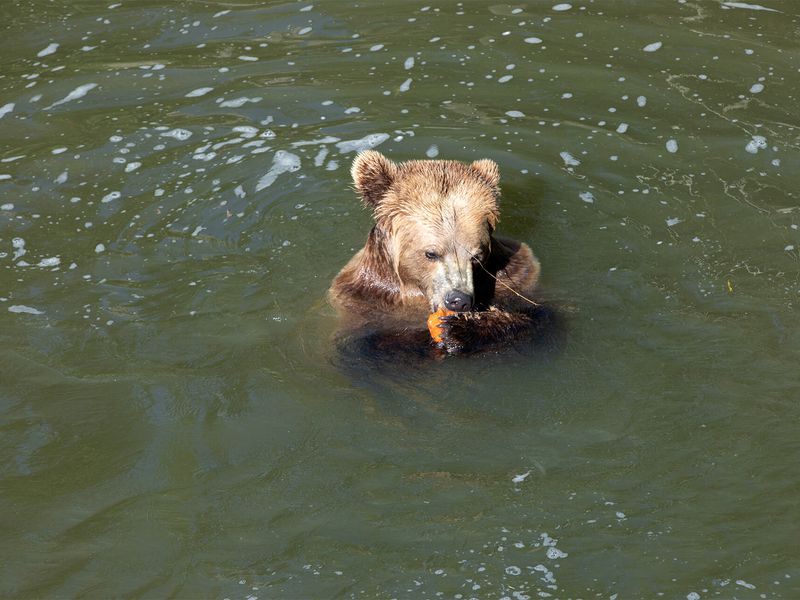
Did you know?
The bears are preparing for hibernation
They’ve dug their own den!
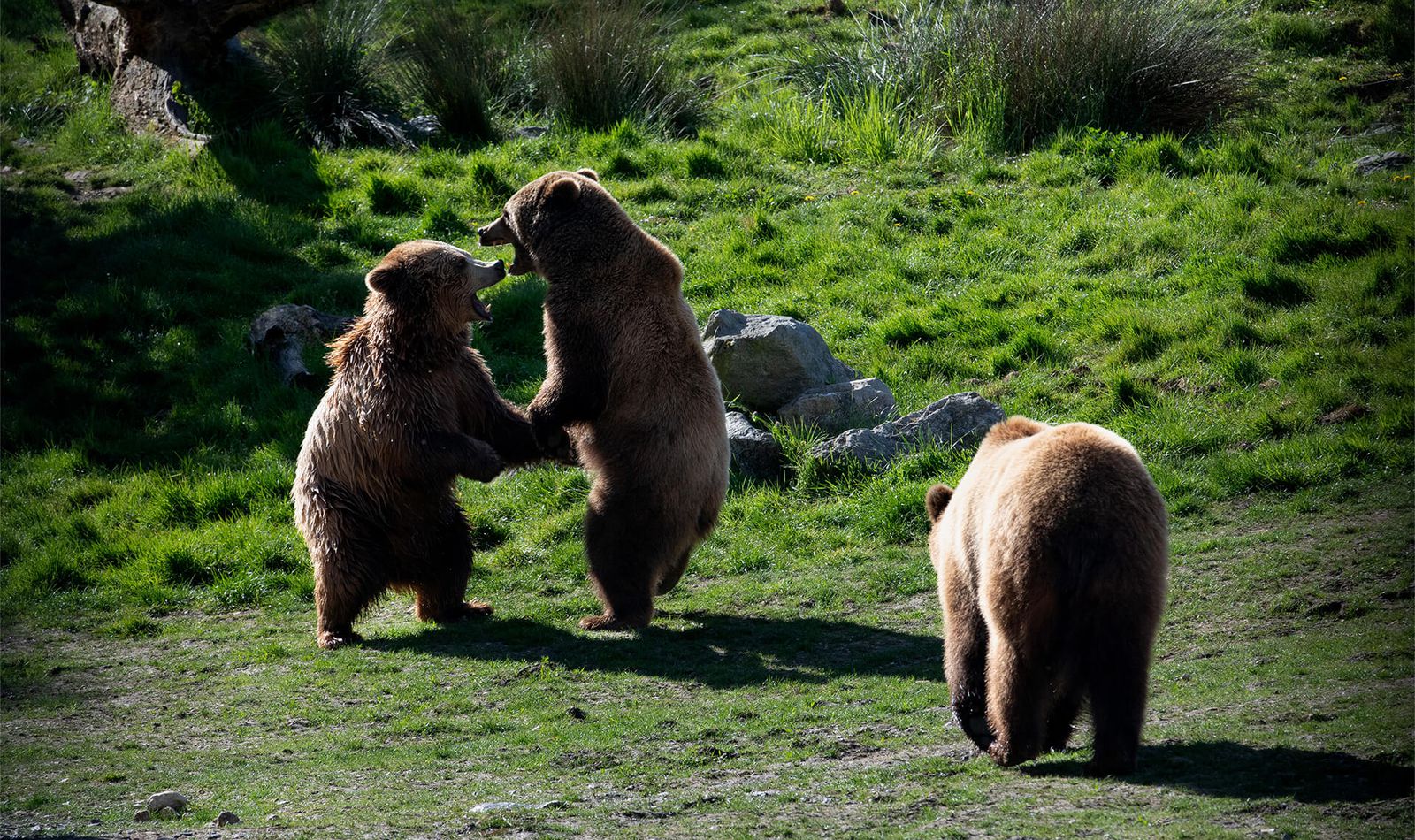
While our keepers prepare cosy winter dens filled with fresh straw, Beauval’s three female brown bears : Diablo, Drull and Delete are still enjoying the outdoors and following their natural instincts… by digging their own shelter! Watch the video to discover this fascinating stage in the annual life cycle of brown bears.
Humans remain their greatest threat
The greatest threat to the brown bear is people. The species itself is not currently considered globally threatened and is classified as “Least Concern” on the IUCN Red List. The worldwide brown bear population is estimated at between 180,000 and 200,000 individuals.
In 2025, the brown bear population in the French Pyrenees was estimated at 104 individuals, according to the French Office for Biodiversity (OFB). This encouraging increase is tempered by the population’s low genetic diversity due to the limited number of breeding animals. Additional reintroductions would help ensure the species’ long-term viability.
Coexistence between people and large predators remains challenging, as declining natural prey populations can lead bears to prey on livestock. In France, government-funded programmes help livestock owners protect their herds through preventive measures and deterrent equipment.
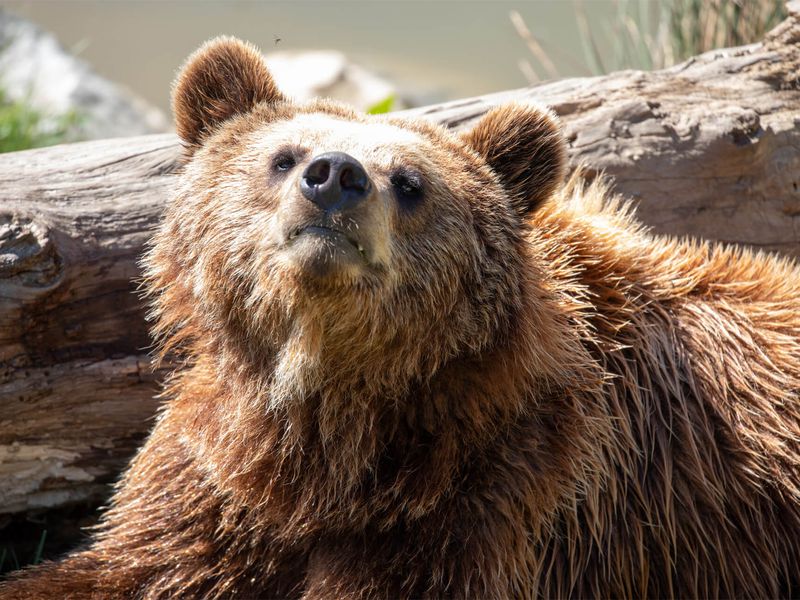
Three sisters with a sweet tooth!
Diablo, Drull and Delete are three female brown bears born on 16 January 2017 at Lycksele Zoo in Sweden. Born in the same litter, they arrived at Beauval on 27 October 2018.
Curious yet naturally cautious, they are especially known for their playful personalities and their love of food. Their absolute favourite treat? Honey, without hesitation!
When they are not searching for tasty snacks, they enjoy cooling off in their pool, especially when their keepers have hidden treats in or around the water as enrichment.
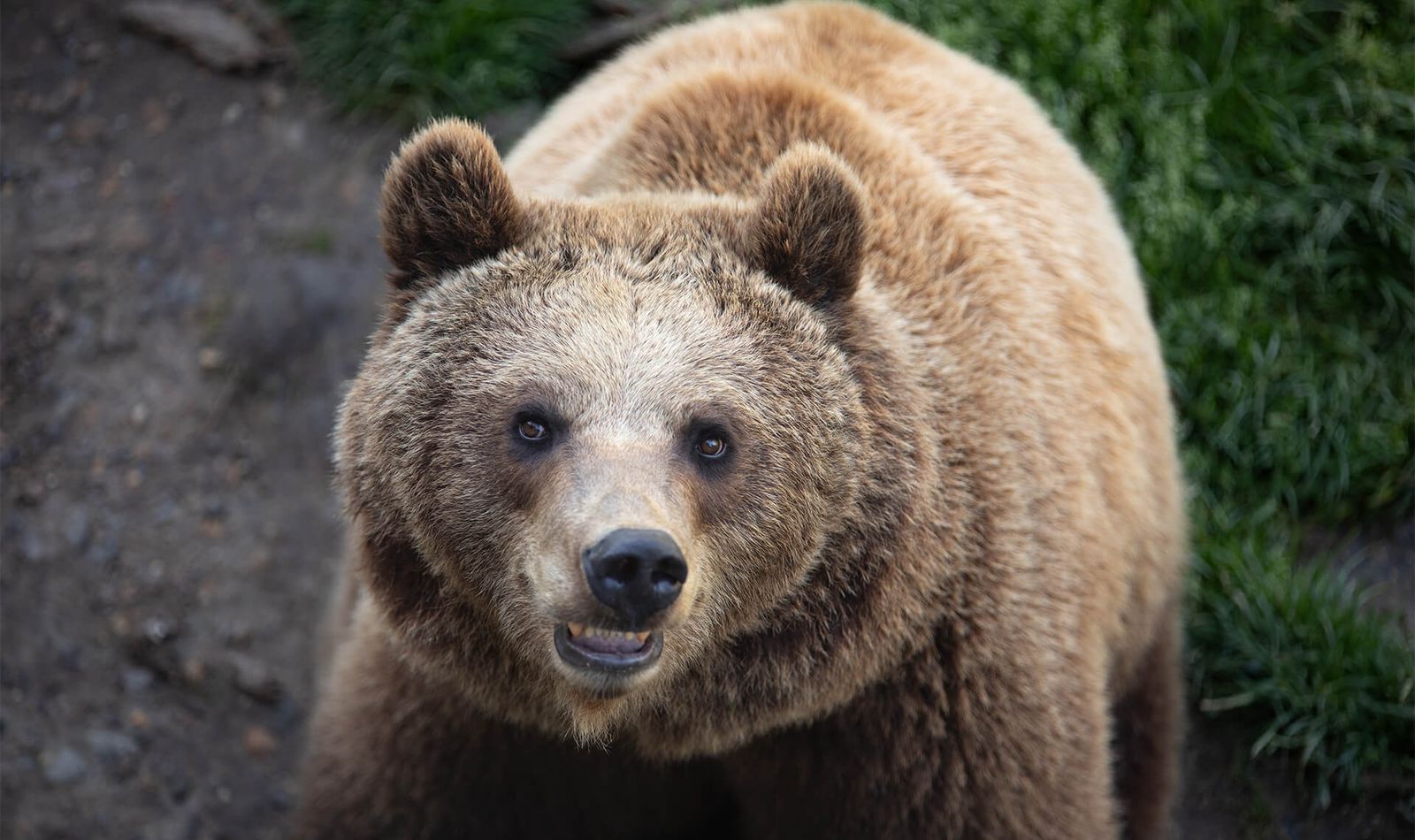
Diablo is the easiest to recognise thanks to her lighter-coloured coat and is also the dominant bear of the trio. Delete and Drull both have darker fur, but can be distinguished by the shape of their heads, with Delete having the broader face.
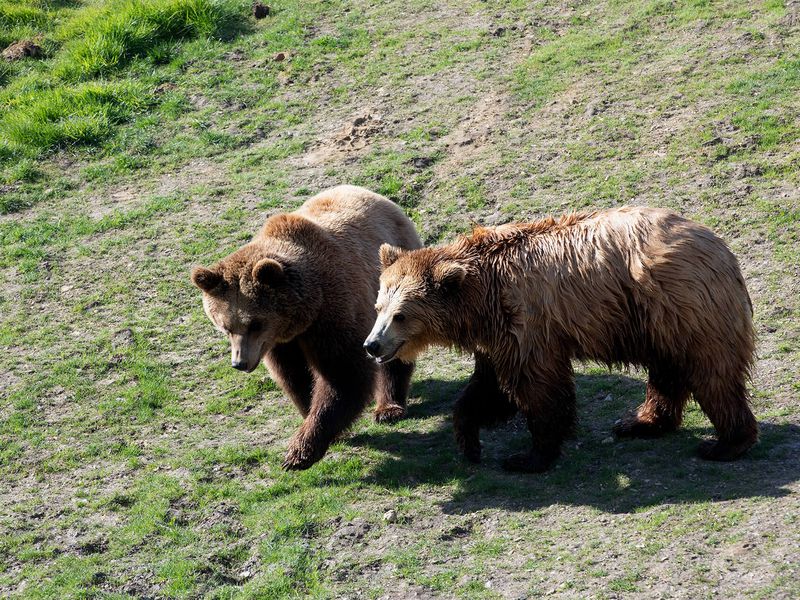
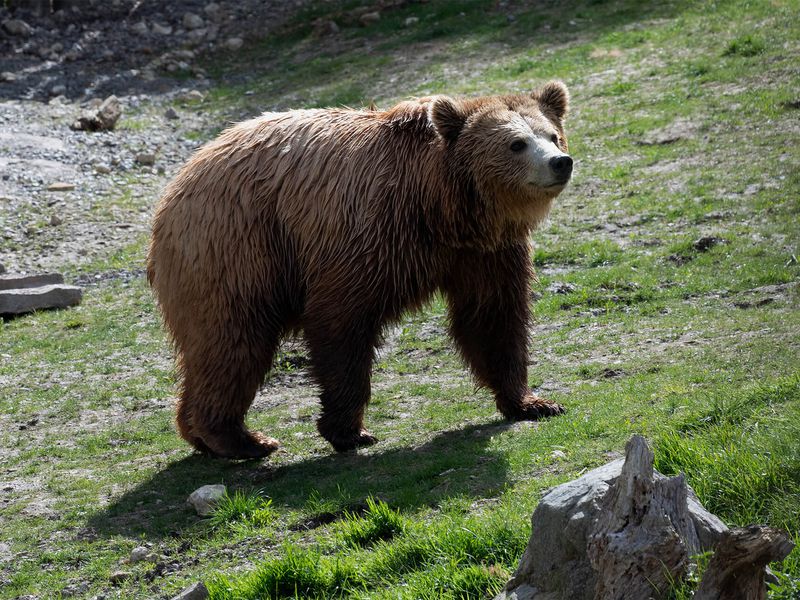
Sponsor our brown bears
Establish a strong bond with your favourite animal whilst supporting conservation programmes through the Beauval Nature association!
Least concern
Learn more about the species
-
OmnivoreDiet
-
6 to 9 monthsGestation period
-
1 to 3 cubsLitter size
-
Wetlands, Arid environments, Forests, Mountains, PasturesHabitat
An excellent sense of smell, but poor eyesight
Winter births made possible by delayed implantation
Revered, feared and legendary

Take full advantage of the experience thanks to our mobile application!
Find out more