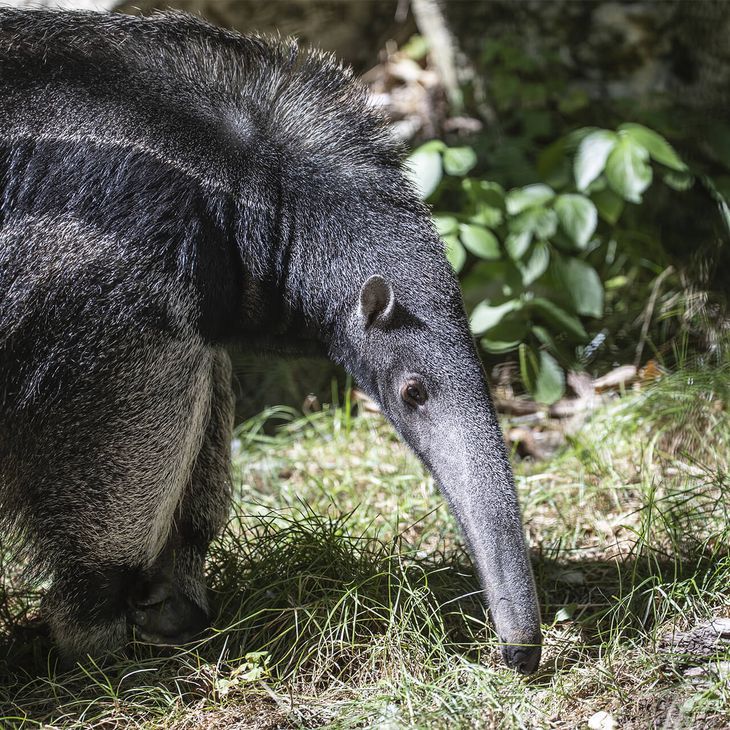
« Not a single tooth, but a 60 cm tongue: the giant anteater is an exceptional insect hunter »
The giant anteater
The largest of the anteaters
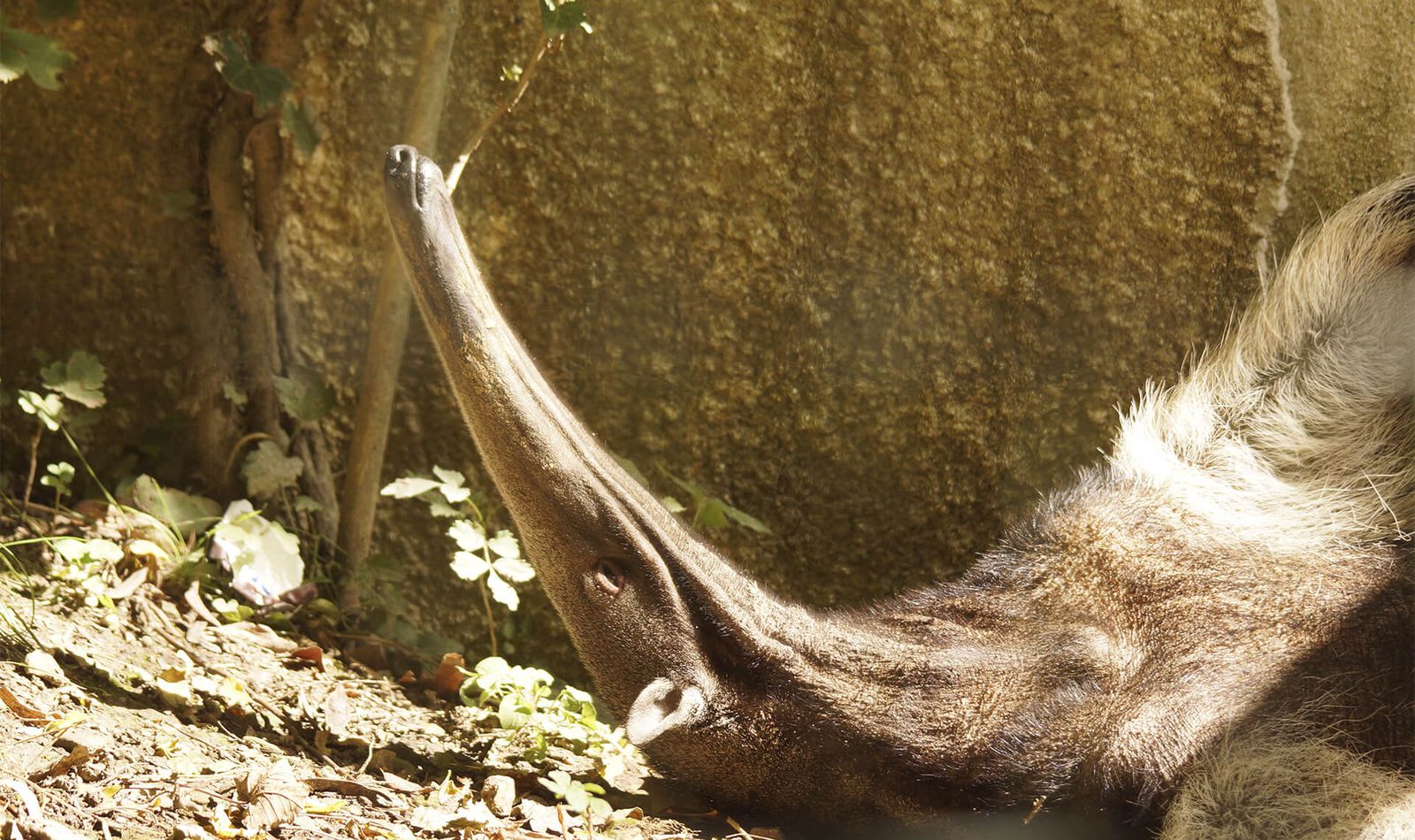
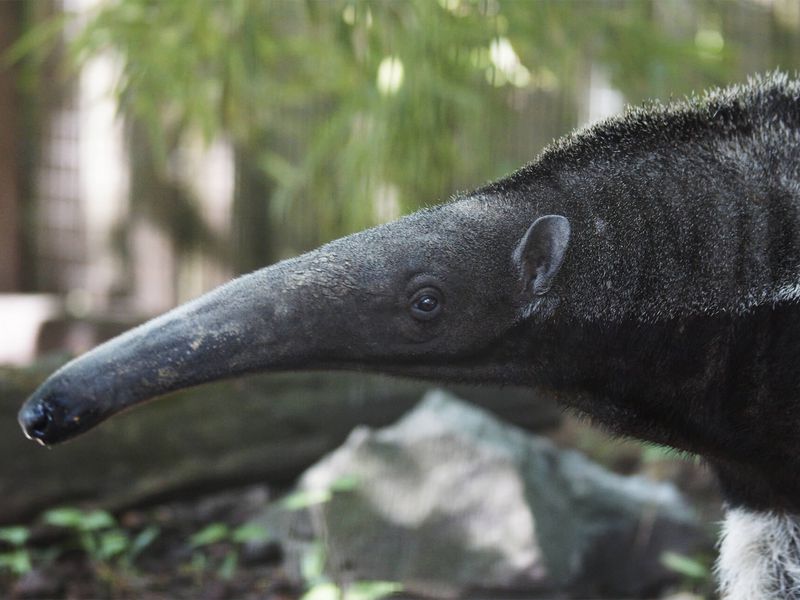
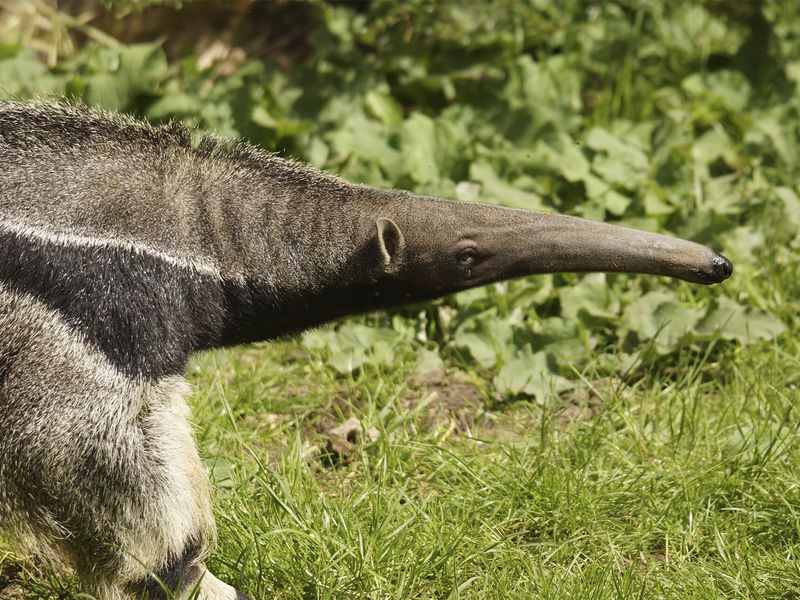
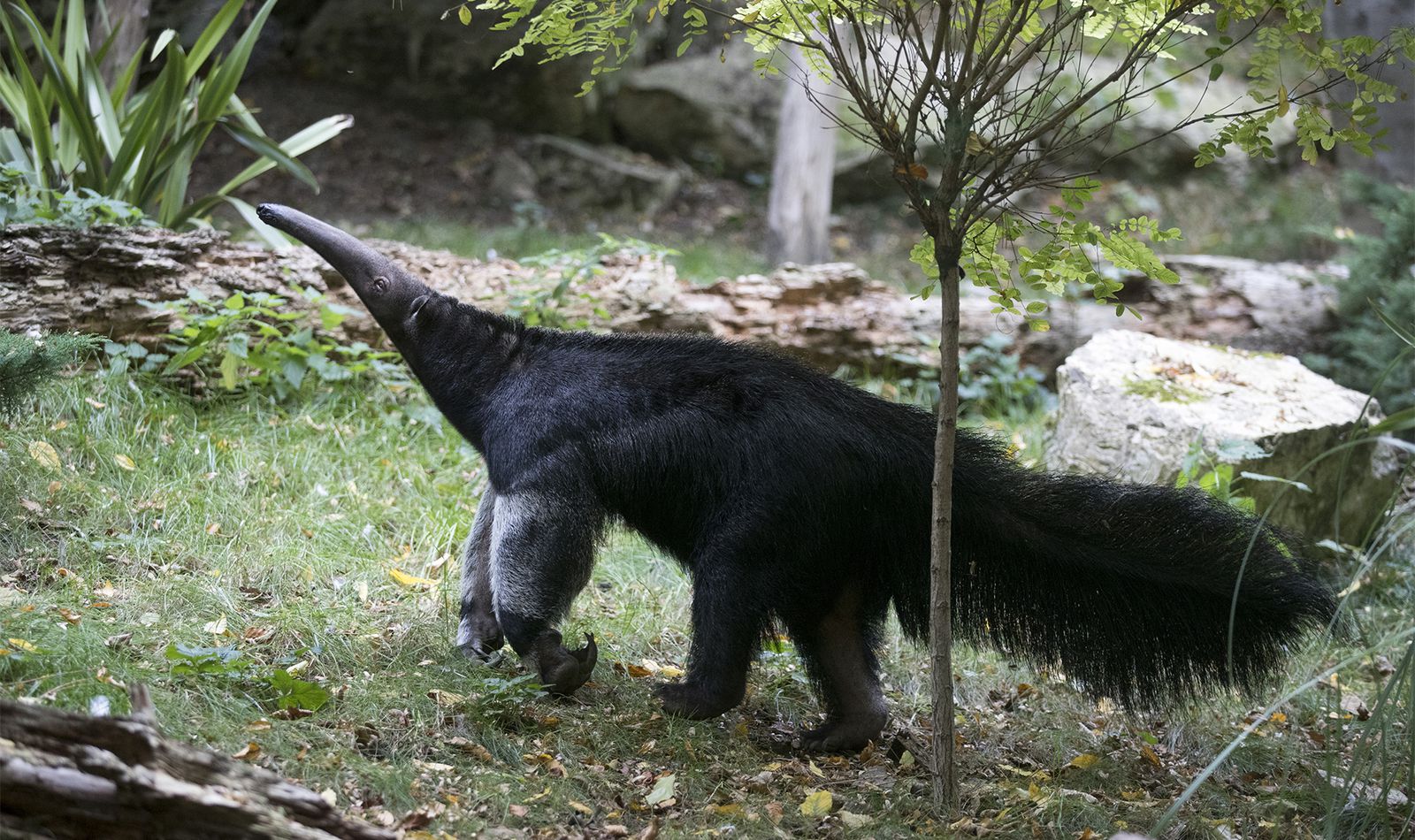
The giant anteater is the largest anteater species. This mammal from Central and South America is instantly recognisable by its long, tube-shaped snout, large bushy tail and distinctive black, white and brown coat.
It has no teeth and feeds almost exclusively on ants and termites, which it captures using an extraordinary tongue. A terrestrial and solitary animal, it travels across large areas in search of food. The giant anteater is one of the many species you can discover in Beauval’s animal directory.
Did you know?
Inca, a baby giant anteater born at Beauval
She’s doing wonderfully well!
Remember, on 1 April 2025, a very special little arrival made its debut in the South American Aviary: a baby giant anteater was born.
The little female, named Inca, is doing wonderfully well!
A vulnerable species supported by Beauval
Classified as “Vulnerable” by the IUCN, the giant anteater has disappeared from many parts of its former range, particularly in Central America.
Wildfires affecting the Pantanal and Cerrado, road collisions, hunting and habitat destruction all place significant pressure on its populations.
In Brazil, Beauval Nature supports the giant anteater conservation programme run by ICAS, the Wild Animal Conservation Institute. Teams in the field study and monitor giant anteaters, work to reduce vehicle collisions, and help rehabilitate and release rescued animals.
Where can you see the giant anteater at ZooParc de Beauval?
At ZooParc de Beauval, you can discover the giant anteater in The Great South American Aviary, at the heart of a vast space dedicated to South American wildlife.
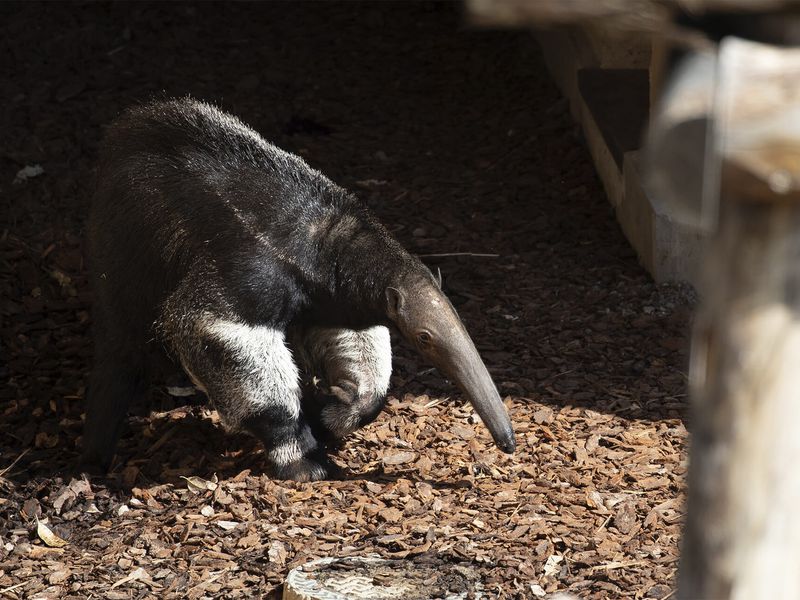
Take the time to watch it exploring its territory with its long snout close to the ground as it searches for scents and food. Its unusual silhouette, long bushy tail and distinctive walk make it very easy to recognise.
Find its location on the ZooParc map and take the opportunity to discover the many South American species living within Europe’s largest aviary.
Sponsor our animals
Establish a strong bond with your favourite animal whilst supporting conservation programmes through the Beauval Nature association!
Vulnerable
Learn more about the species
-
InsectivorousDiet
-
6 to 7 monthsGestation period
-
1 youngLitter size
-
Pastures, Forests, WetlandsHabitat